



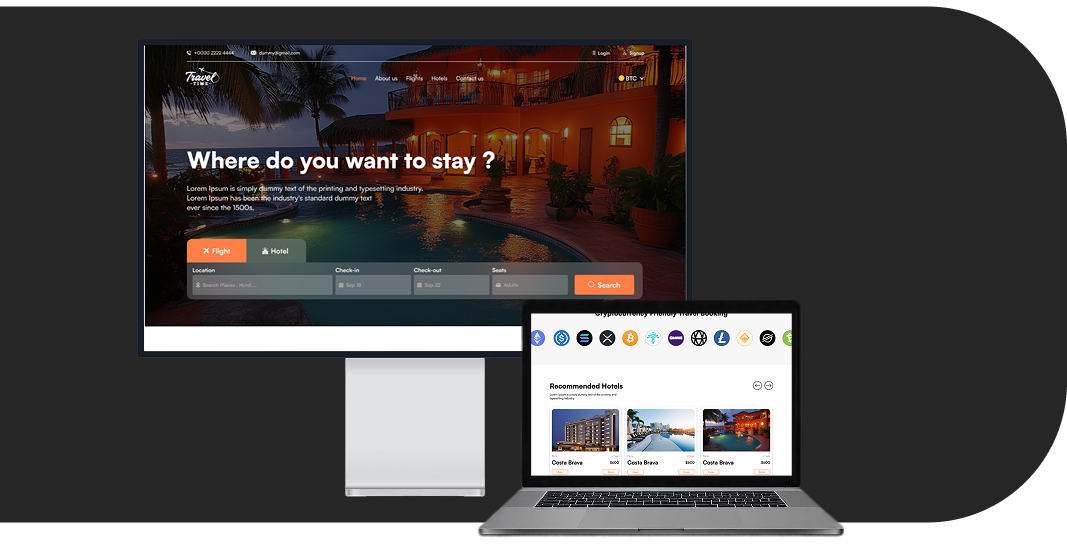
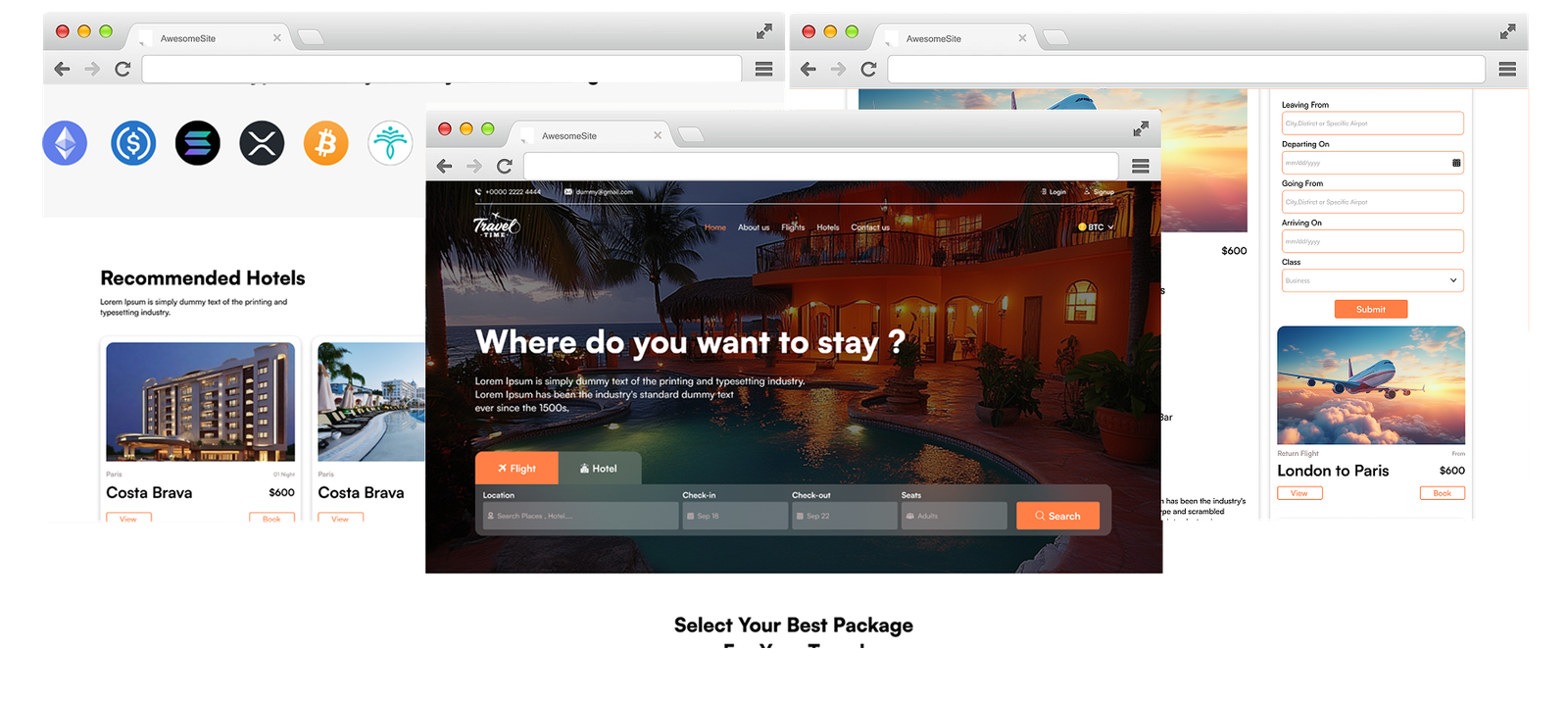
TravelTime is a full-featured travel web application developed to unify the fragmented experience of booking flights, hotels, ground transportation, and luxury services such as yachts or private cars—all in a single, elegant platform. Designed with a modern and responsive UI/UX, the goal was to give users full control over their itineraries and preferences, including amenities selection, package customization, and real-time booking confirmations. This project aimed to deliver a concierge-level travel experience within a highly scalable digital framework.
Essential Productivity
Toolbox














The Client
Feedback
From concept to launch, their web development team delivered beyond our expectations. The design is clean, responsive, and user-friendly. They took time to understand our goals and built a website that performs exceptionally well on both desktop and mobile.

Emma Alex
Customer Satisfy
Catch a Glimpse of More
Happy Customer Experiences Below…
Challenges
This project presented a diverse range of design, integration, and system architecture challenges, including:
1. Multi-Service Booking Infrastructure
Combining flight, hotel, car rental, and luxury yacht booking into one synchronized system without sacrificing performance or usability.
2. Real-Time Availability & Inventory Sync
Ensuring that users only saw real-time availability for flights, hotel rooms, and vehicles, requiring live integration with multiple third-party APIs.
3. Dynamic Pricing & Customization
Supporting user-specific rates, seasonal pricing, and add-on amenities (like spa services, insurance, chauffeur options) based on availability and location.
4. Unified Booking Experience
Creating a cohesive booking experience that could adapt to the selection of one or multiple services—e.g., flight + hotel + car—with a single checkout and confirmation flow.
5. Luxury Services Integration
Incorporating premium experiences like yacht rentals and VIP transport, which often require manual processing, into an automated and scalable booking module
Solution
To overcome the multi-layered challenges, a carefully phased development approach was adopted:
✅ Microservice-Based Booking Modules
Each service—flights, hotels, rentals, yachts—was built as an independent module, allowing for flexible deployment and easier future scaling, while maintaining a unified frontend.
✅ Live API Aggregation Layer
Developed an aggregation engine that pulled real-time data from multiple travel service providers (GDS APIs, hotel platforms, transport aggregators), providing up-to-date inventory and pricing to users.
✅ Smart UX for Multi-Service Flow
Designed a context-aware booking wizard that intelligently adjusts based on user behavior (e.g., selecting a flight first unlocks suggested hotels and cars nearby). This ensured a smooth multi-service checkout process.
✅ Advanced Filtering and Amenities Engine
Built a customizable filtering system where users could refine results based on luxury level, ratings, location proximity, and amenities like Wi-Fi, sea views, or pet-friendliness.
✅ Luxury Service Automation
Luxury rentals such as yachts or premium limousines were integrated with concierge-style forms backed by admin automation, allowing semi-automated handling with client-facing simplicity.
Results:
TravelTime successfully launched as a comprehensive travel management solution, bridging the gap between everyday travel needs and premium lifestyle experiences. Users now enjoy a fully synchronized, responsive, and intuitive booking system that covers everything from economy flights to private yacht charters. Post-launch analytics revealed a 75% increase in successful multi-service bookings, with user satisfaction feedback highly positive, particularly around speed and ease of use. The client celebrated the platform’s ability to cater to both mainstream and luxury travelers in a single, elegant interface.

Improved Searchability:
The search function enabled users to easily find relevant businesses, leading to a 30% increase in page views for business listings.
Enhanced User Experience:
The map and list views, along with location-based organization, provided a more intuitive and engaging way for users to explore businesses, resulting in a 15% increase in average time spent on the website.
Optimized for All Devices:
The website was optimized for seamless viewing on desktops, laptops, tablets, and smartphones, ensuring accessibility for a wider audience.
Conclusion:
Michal’s existing website presented a unique challenge to me as the map functionality couldn’t leverage the readily available Google Maps API due to budget constraints. Instead, I took on the task of crafting a custom map using HTML and CSS, meticulously gathering data from individual city maps and integrating search filters. When the project scope shifted to include dynamic vendor entries, I seamlessly pivoted, rebuilding the map as a dynamic form utilizing loops and Ajax for data posting. However, integrating the front-end map with the Laravel backend led to unforeseen cross-origin errors due to version incompatibilities. To overcome this hurdle, I strategically upgraded the Laravel project to a compatible version, effectively resolving the conflict and establishing smooth data flow.